
Waist-Height Turnstiles: A Practical Access Control Solution for Commercial Facilities
The body content of your post goes here. To edit this text, click on it and delete this default text and start typing your own or paste your own from a different source.
Why Waist-Height Turnstiles Are Still a Smart Choice for Controlled Entry
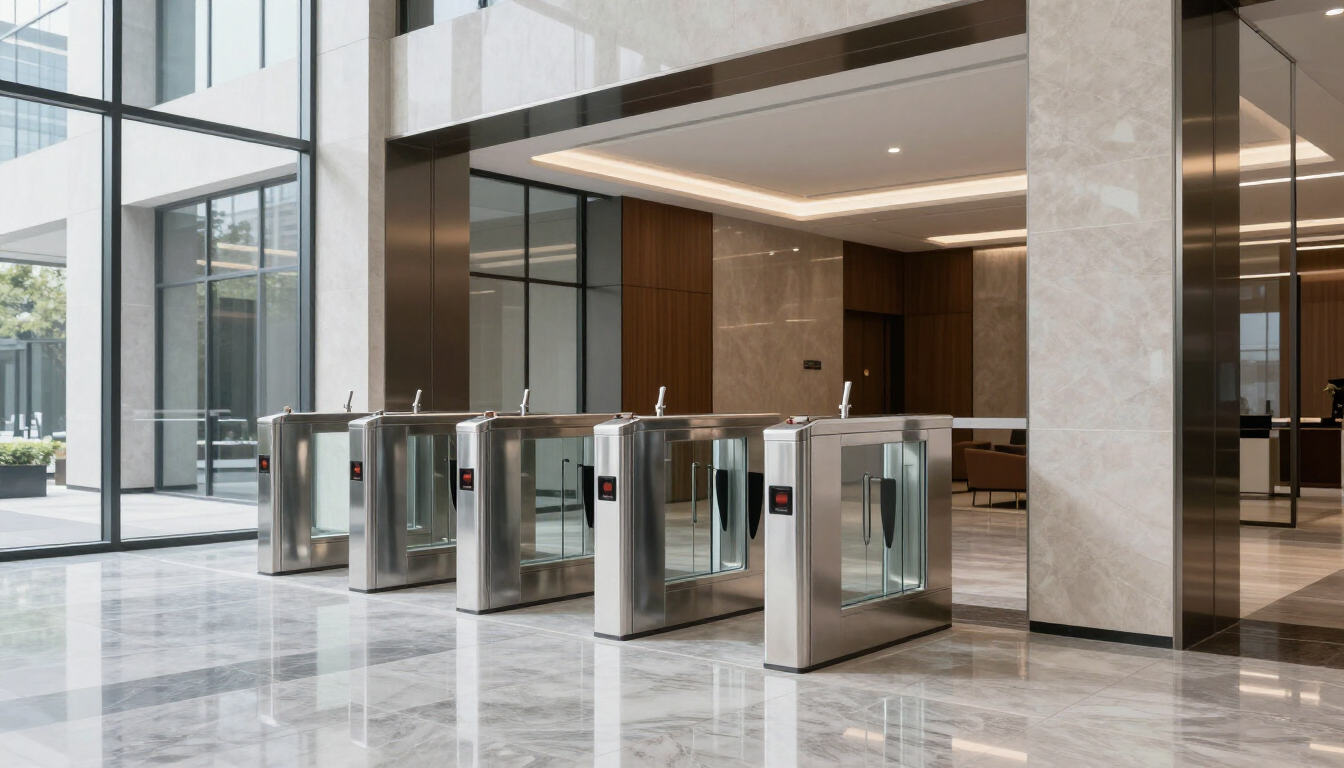
When a commercial facility needs better control over who enters a secured area, the most complicated solution is not always the best one. Waist-height turnstiles have remained a practical choice for decades because they create a clear, controlled point of entry without requiring the floor-to-ceiling barrier of a full-height system.
These systems are particularly useful in locations where security needs to work alongside efficient pedestrian movement. Employees, members, students, visitors, or customers can present an approved credential and move through the entrance one person at a time, helping the facility maintain a more organized flow of authorized traffic.
Unlike an ordinary unlocked doorway, a waist-height turnstile creates a physical checkpoint. At the same time, its lower profile can make it a better fit for environments where maintaining visibility and an open atmosphere is important.
Facilities that may benefit from waist-height turnstiles include:
- Athletic and fitness facilities
- Sports arenas and entertainment venues
- Amusement and recreation facilities
- Transit environments
- Manufacturing and industrial facilities
- Employee entrances
- Commercial buildings
- Campuses and controlled interior areas
MRKset offers waist-height turnstiles designed for security and crowd control in a variety of environments. Systems such as the Hayward MR200 FasTurn combine durable construction with a streamlined design, making them suitable for locations that need reliable access control without creating an unnecessarily imposing entrance.
The Right Turnstile Depends on How the Entrance Is Used
Before choosing a waist-height turnstile, facility managers should think about who will use the entrance and what needs to happen each time someone arrives. An employee entrance at a manufacturing facility has different requirements from the entrance to an athletic facility or entertainment venue.
Traffic volume is one consideration. If hundreds of employees arrive during a shift change, the entrance needs enough capacity to prevent unnecessary backups. A location with lower but steady traffic may be able to accomplish the same security goal with fewer lanes.
Facilities should also consider how people will authenticate themselves. The turnstile can become part of a larger access control system so approved users can present a badge or other credential before the system permits passage.
It is equally important to think about people and objects that cannot conveniently pass through a standard turnstile lane. Accessible entry, carts, deliveries, equipment, and other needs may require an adjacent gate. Planning both types of entry together helps create an entrance that provides security without interfering with everyday operations.
For organizations planning access control projects across the United States, the goal should be to match the equipment to the facility rather than forcing the facility to work around the equipment. Understanding traffic, security requirements, accessibility, credentials, and daily operations first makes it easier to select a turnstile configuration that will continue working well after installation day.

Tripod Turnstiles and Gates Serve Different Entrance Needs
A waist-height entrance does not necessarily consist of identical turnstiles lined up across an opening. Depending on the facility, the best design may combine traditional turnstile lanes with one or more adjacent gates to accommodate different users and situations.
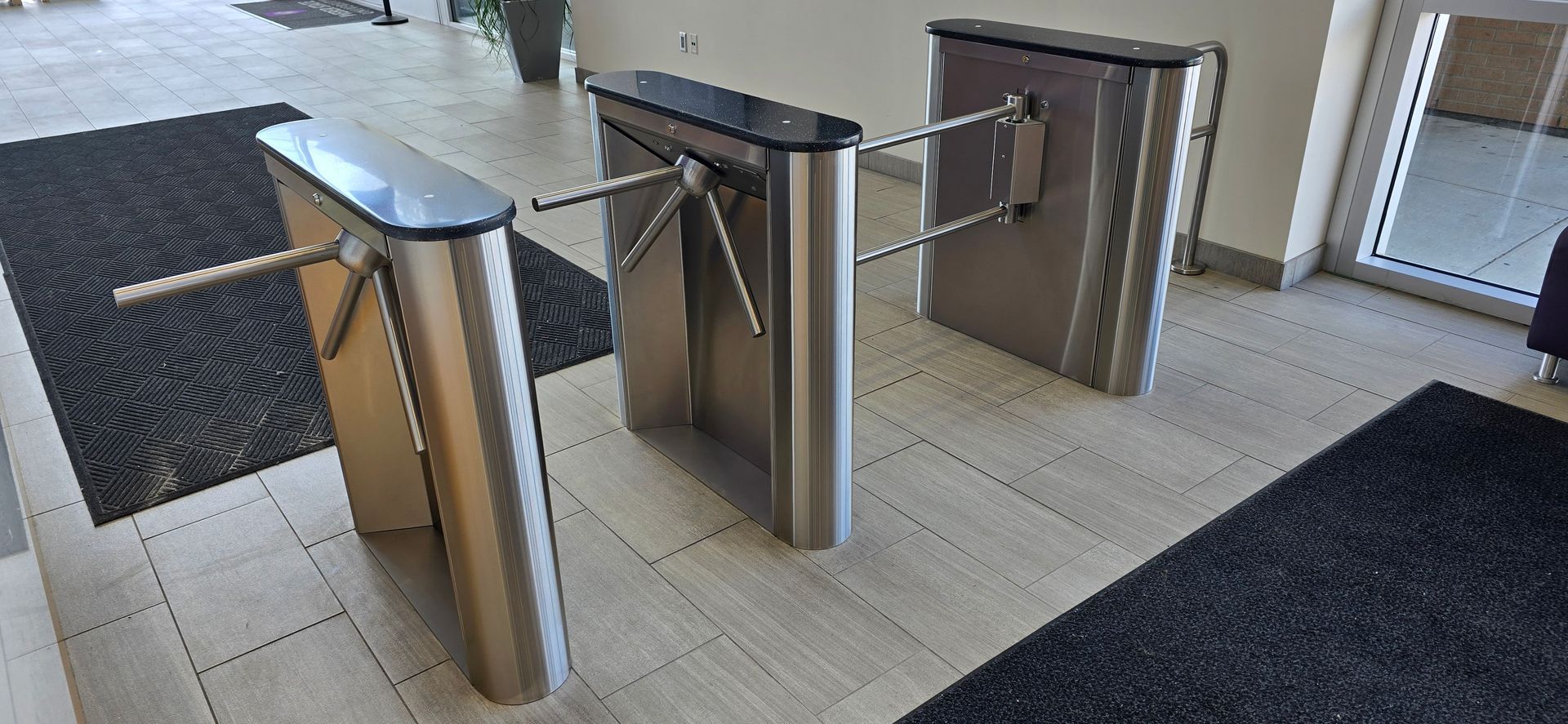
Tripod-style turnstiles use rotating arms to regulate passage through the lane. Their straightforward mechanical design makes them a practical option for locations where durability and reliable crowd control are priorities. They can be configured around the way the facility manages entry and exit while integrating with electronic access control.
A matching gate provides a wider passage where a standard turnstile would be inconvenient or inaccessible. This is especially important when designing an entrance that needs to accommodate a broader range of people and daily activities.
When planning a waist-height turnstile system, decision-makers should ask:
- How many people will use the entrance during peak periods?
- Will the turnstiles control entry only or both entry and exit?
- What credentials will authorized users present?
- Does the entrance need a wider accessible gate?
- Will carts, deliveries, equipment, or other large items regularly pass through?
- Is the location staffed or monitored?
- How much physical space is available for the entrance system?
- Does the equipment need to complement an existing architectural design?
These questions help determine not only which turnstile to choose but also how the entire entrance should be configured. A system that works smoothly during normal daily traffic is more useful than one that technically provides access control but creates unnecessary congestion or operational headaches.
How Access Control Turns a Turnstile Into a Managed Entrance
The physical turnstile is only one part of a modern controlled entrance. When integrated with an electronic access control system, it can respond to the same credentials and permissions a facility uses to manage other secured areas.
An authorized user presents the appropriate credential, the access control system determines whether entry is permitted, and the turnstile allows passage according to the system configuration. This creates a more consistent process than relying on employees or security personnel to manually check every person entering the area.
Access control integration can also help organizations manage different groups of users. Employees may have regular access during approved hours, while other credentials can be configured according to the facility's security policies and operational needs.
Depending on the project, a controlled entrance may involve components such as:
- Waist-height turnstiles to regulate individual passage.
- Adjacent gates to provide a wider alternative route where needed.
- Credential readers for the facility's approved access method.
- Access control equipment to manage authorization and system communication.
- Electrical and low-voltage infrastructure to support the installed equipment.
- Data and communication cabling where required for integration.
This is where professional integration becomes especially important. The turnstile, reader, access control system, gate, and supporting infrastructure all need to communicate and operate as intended. Selecting good hardware is only part of creating a dependable entrance.
MRKset works with access control, electrical, low-voltage, programming, engineering, and turnstile installation as part of its nationwide security integration services. Bringing those disciplines together allows the complete entrance to be considered as one system rather than a collection of unrelated components.

The Turnstile Is Only One Part of the Entrance
A successful waist-height turnstile installation starts well before the equipment is mounted to the floor. Lane placement, pedestrian traffic, electrical service, credential readers, accessibility, data connections, and the surrounding architecture can all affect how well the finished entrance functions.
The number of lanes is one of the first considerations. A facility should have enough capacity to manage normal traffic as well as predictable peak periods. For an office or industrial property, that may mean planning around employee arrival and shift changes. At an athletic or entertainment facility, traffic may arrive in much larger waves before an event begins.
The physical layout matters too. Turnstiles should guide people naturally toward the correct lanes without creating awkward bottlenecks around doors, elevators, security desks, or other nearby features. An adjacent gate should also be positioned where it provides practical access without weakening the overall entrance-control plan.
Before installation begins, the project may need to account for:
- The number and width of required turnstile lanes
- Accessible entry and adjacent gate placement
- Peak pedestrian traffic
- Floor conditions and mounting requirements
- Electrical service for the turnstiles and gates
- Data and communication cabling
- Card readers or other credential technology
- Integration with the existing access control system
- Emergency and egress requirements
- Future expansion or changes to the entrance
Considering these details early can reduce the need to make compromises during installation. It also allows electrical, low-voltage, access control, and construction requirements to be coordinated rather than addressed separately after the equipment arrives.
Durability Matters in High-Use Environments
Commercial entrance equipment may be used thousands of times over its working life, so durability is an important part of selecting a waist-height turnstile. This is especially true in athletic facilities, transit environments, entertainment venues, and employee entrances where traffic can be both frequent and concentrated.
MRKset's waist-height turnstile offerings include the Hayward MR200 FasTurn, a heavy-duty access control turnstile designed for applications such as athletic facilities, sports arenas, amusement parks, and transit systems. Its stainless-steel cabinet and streamlined construction provide an option for facilities that need rugged performance while still considering the appearance of the entrance.
Matching gates can also help create a more consistent finished design. Rather than installing a turnstile and then treating the wider entrance as an afterthought, coordinated equipment can help the complete access point look intentional while serving different users.
For architects, facility managers, security teams, and contractors, this balance between appearance and durability can be important. An entrance is often one of the first parts of a facility that employees, visitors, or customers encounter, but it also needs to withstand everyday use without sacrificing the security function it was installed to provide.
Nationwide Waist-Height Turnstile Installation and Integration
Choosing the right waist-height turnstile is only one step in creating an effective controlled entrance. The system also needs to be properly positioned, installed, powered, connected, configured, and integrated with the facility's broader access control strategy.
MRKset provides secured-entry design, engineering, installation, and integration for commercial facilities nationwide. Its services cover the lower 48 states, allowing organizations to work with one security integration partner for projects in different regions of the country.
This nationwide capability can be particularly useful for companies with multiple locations. Instead of developing an entirely different entrance solution at each facility, organizations can work toward a more standardized approach while still accounting for differences in building layouts, traffic levels, and local project requirements.
Whether a project involves one employee entrance or a larger multi-lane installation, the planning process should consider how people actually use the facility. The right combination of waist-height turnstiles, gates, credential readers, access control, electrical infrastructure, and professional installation can provide a secure entrance without unnecessarily complicating everyday movement.
For businesses and organizations looking for waist-height turnstile installation anywhere in the United States, MRKset can help design and implement a solution around the facility's specific security and traffic requirements. From initial planning through installation and system integration, a coordinated approach can help create an entrance that delivers reliable access control while supporting efficient daily operations.
Recent Posts